
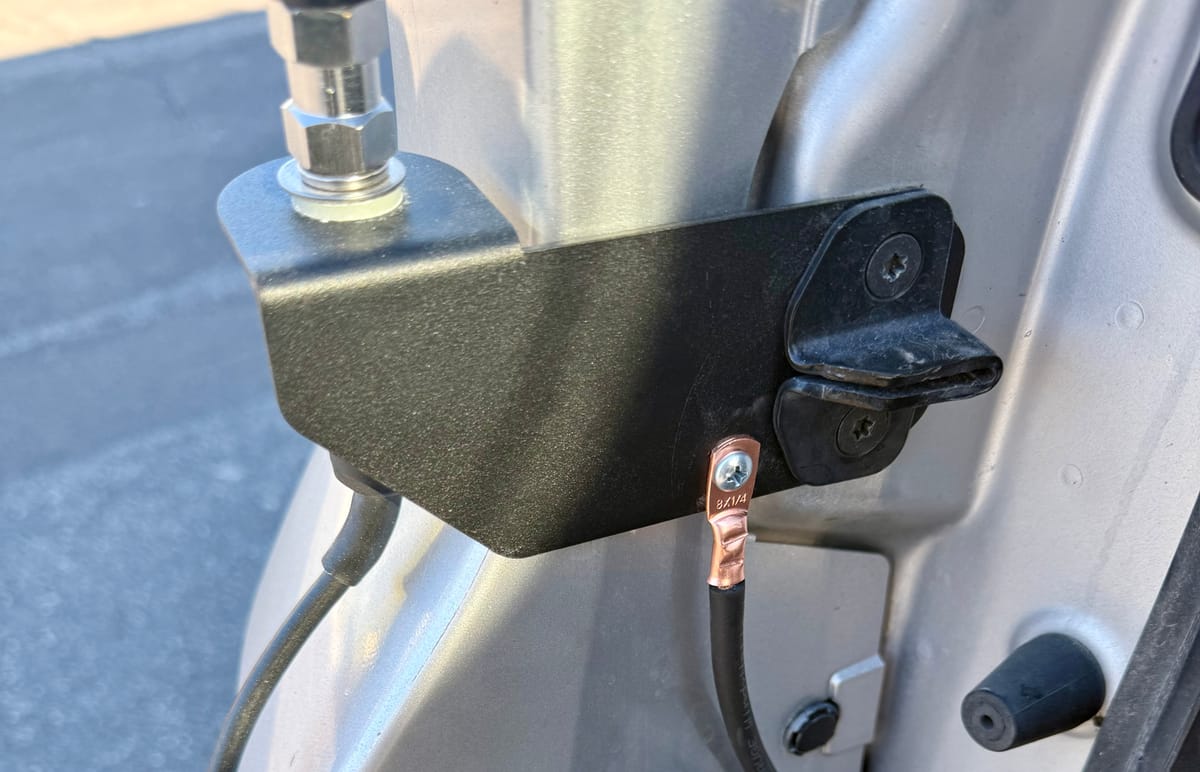
I'm happy to report that my days of unemployment have been short-lived and are coming to an end this week: cue me frantically starting and finishing as many projects on the list as possible, including this one. Mobile HF, the ability to receive and transmit while in motion or parked with no setup, has been a curiosity of mine for a long time. After finding a couple of YouTube videos (linked below) on the subject, my confidence was high and I took a stab at it.
The name "ham stick" is a somewhat generic term for a cheap mono-band antenna. They're around $30 each, and I went with a Shark Antennas brand whip.
Prerequisites
I was lucky to have won an eBay auction on an ICOM IC-7000 years ago - the "all mode, all band" shack in a box of its time. It's a fantastic radio for mobile given its remote face, and it has a lot of existing support in the car already: sufficient power, an automatic antenna tuner, a safe home, and a (DX Engineering) feedline choke. I feel like the IC-7000 has just been in the car waiting for this 'final' addition.
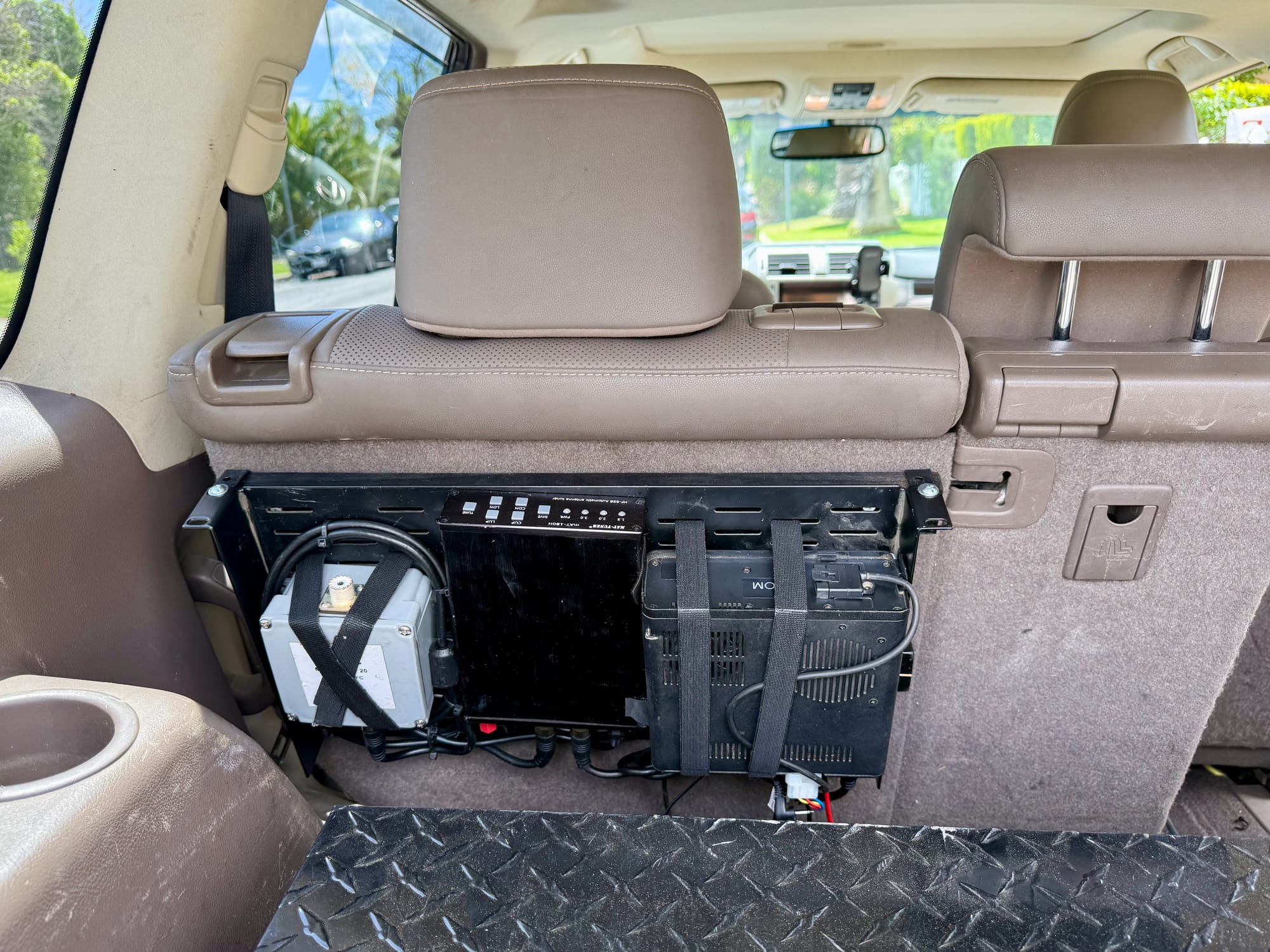
The Setup
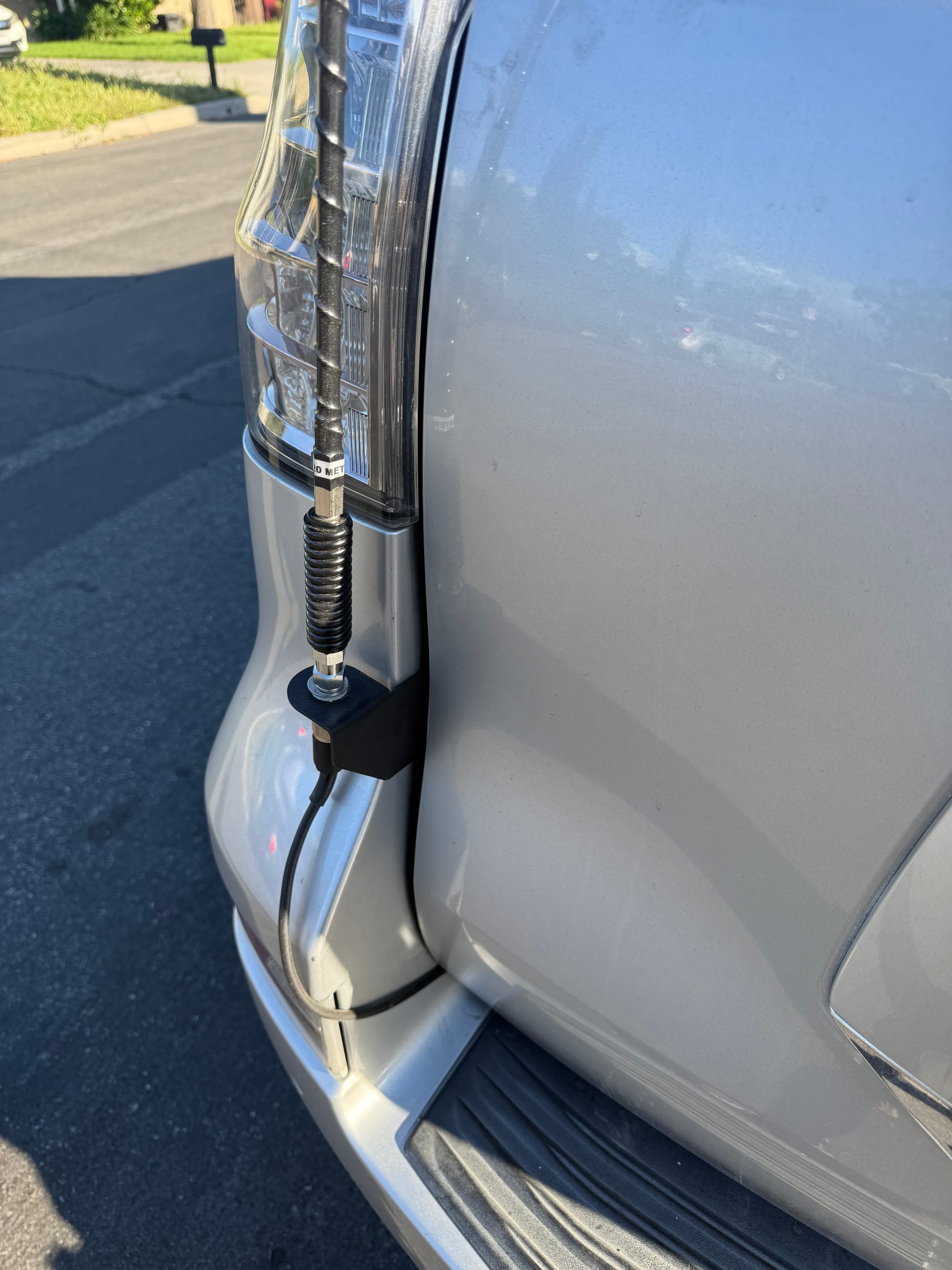
I chose a nice low-profile mount from Bison Gear made specifically for my vehicle model. No drilling required, as you'll see below. Took around a week to arrive and I'm very happy with it. These mounts are the standard 3/8" mount often seen with CB antennas. If you're unfamiliar, definitely watch the first video below where the host covers the passthrough and grounding aspects of the design.
So you install the antenna and physically tune it using an SWR meter and patience, or an antenna analyzer. I decided to tune around the 20M center frequency and got it pretty happy!
It's worth noting that the Noise Blanker is 100% necessary when the car is running, even more so when its air conditioning compressor is active, yikes! Yes, the beloved 2016 GX-460 will bring a nice S2 noise floor up to S9 or more.
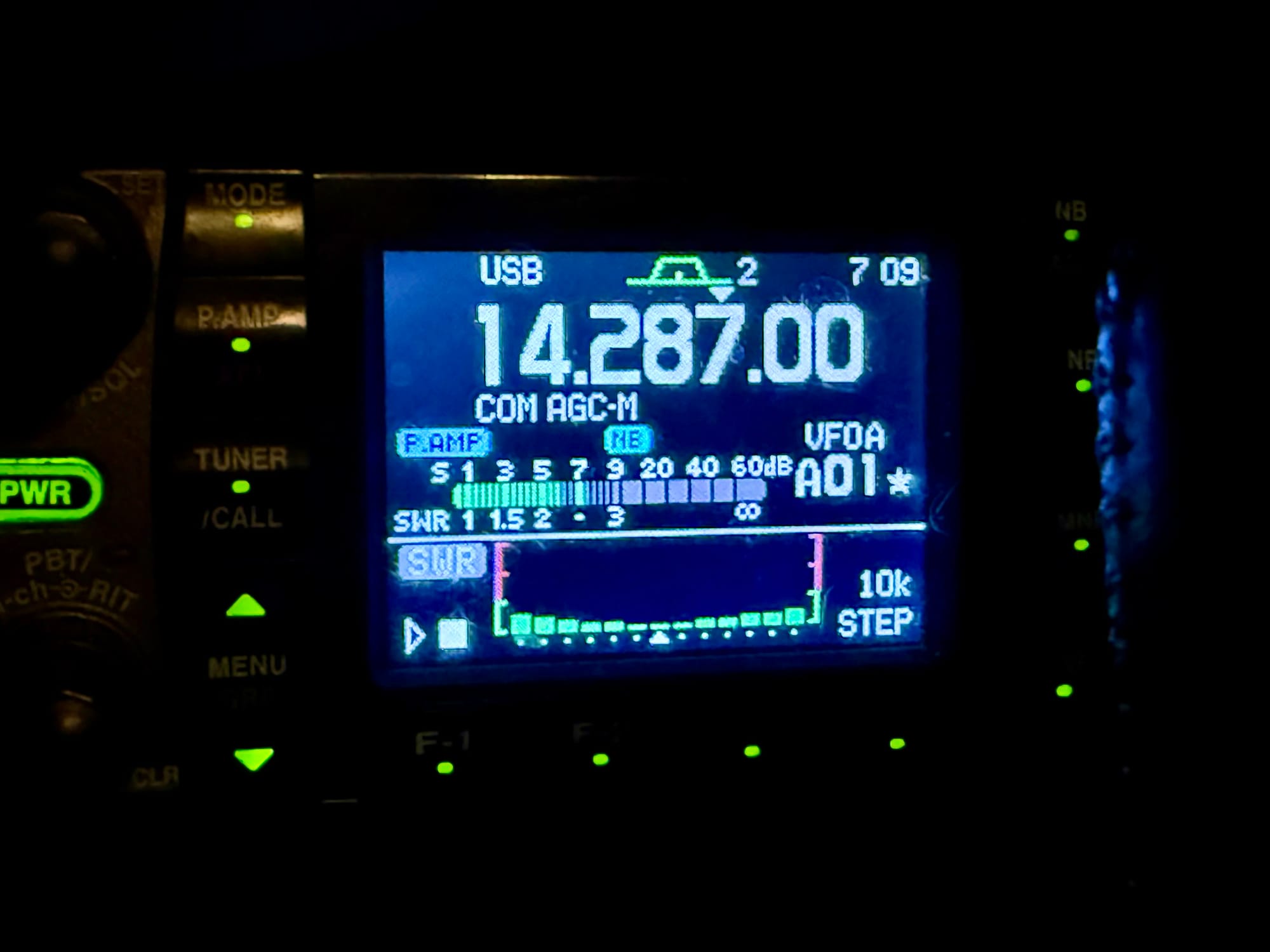
But something to still wasn't right. SWR was good and I was receiving fine but couldn't get out for the life of me! Read on:
The Big Lesson Learned
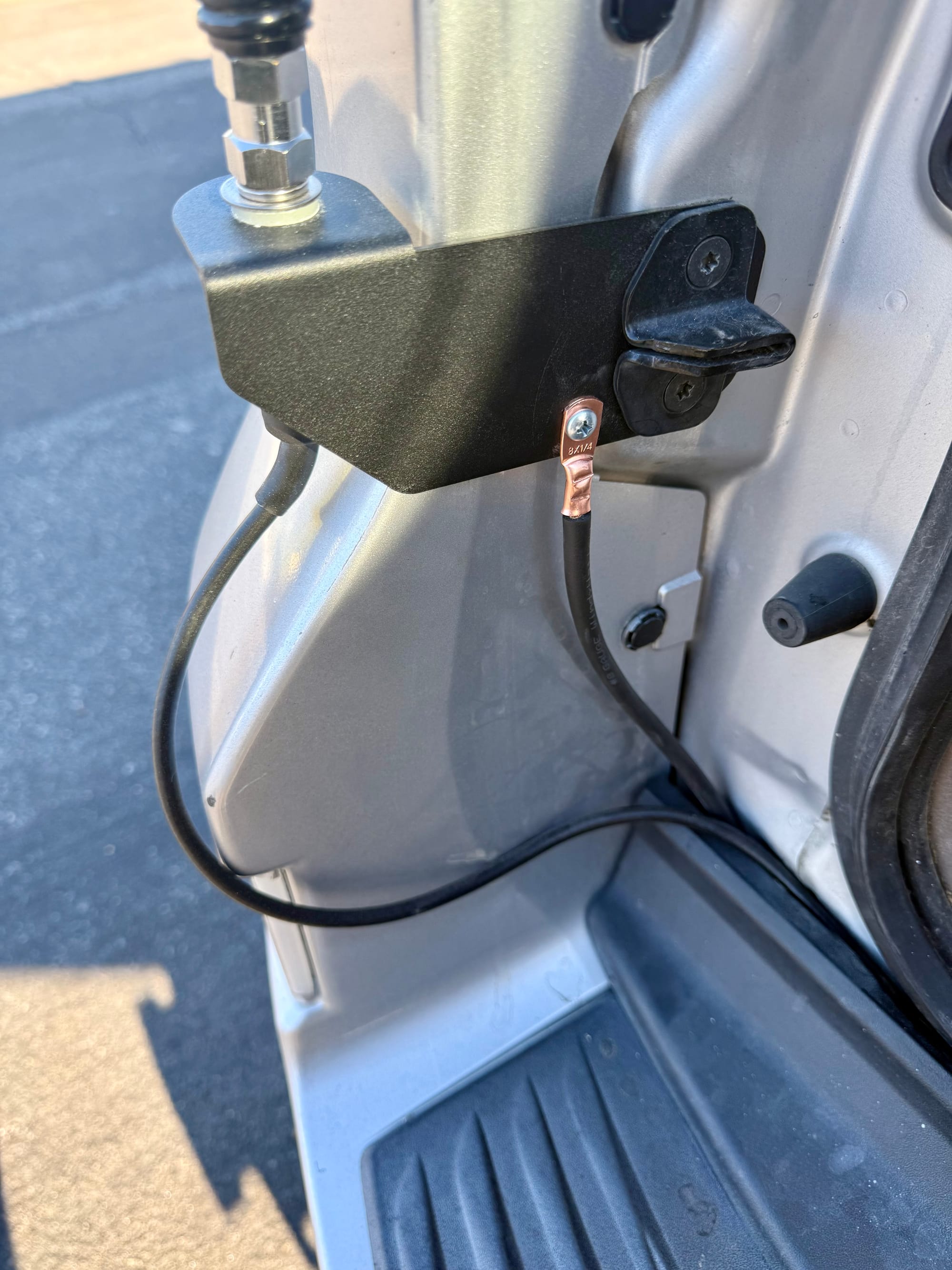
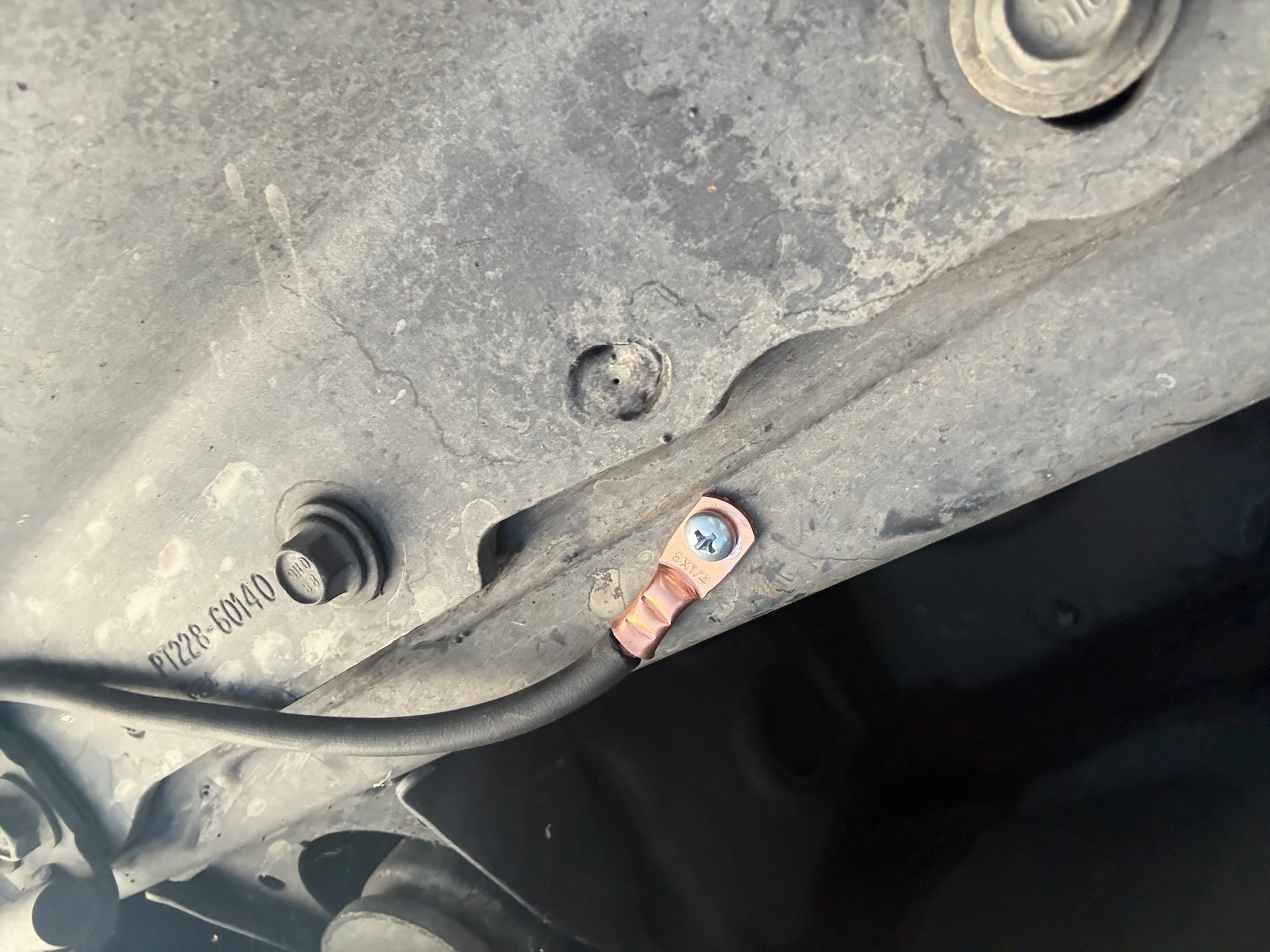
GROUNDING. Since this is a whip antenna, the car is of course the counterpoise/ground. As seen in the first YouTube video linked below, I sanded the antenna mount and its home for a strong bond, and used an ohmmeter to prove grounding between the antenna connector and tow hitch, frame, etc. HOWEVER, I learned that just because a path is shown with a meter doesn't mean the radio's massive transmission juice (potentially 1,000 volts!) will choose that route. It doesn't show that it's an optimal route, just that it's a route. So it's a good start, but testing, bonding/grounding, and more testing must come after.
Here's where I landed: a short 8 AWG jumper from antenna mount to frame. With the car's rear door closed, the dirty details are hidden away:
Finally, A Good Result!
Not until after the above was done was I able to make contacts and hear myself on the beloved Utah SDR. I want to note that SWR looked good all throughout, but I wasn't getting out prior to the grounding wire!
YouTube Videos
What's Next?
- This great video from Michael Martens (KB9VBR) has me thinking, perhaps I don't need a huge collection of mono-band ham sticks after all. Hmm...
- I just received the Ham Stick Mini which is a tiny version of the 20M antenna, and I'm looking forward to trying out.
- Finally, I'm very curious: with a body-on-frame vehicle, should I also be looking to ground as many body panels as possible as well? After all, the body sits on the frame unlike unibody
Until next time, 73 to you and yours! 🙂

Member discussion: